50 Historical Moments You Can Explore in 360°
Every scene in HistoryGuesser is a real, dated event with real coordinates — from the Great Pyramid rising above the Nile floodplain in 2570 BC to the Burj Khalifa topping out over Dubai in 2008. Each one has a page here: what it was like to stand there, how the moment unfolded, the visual clues that date it, and the thing most people get wrong.
- stories
- 50 stories
- words of history
- 51,536 words of history
- questions answered
- 150 questions answered
Find a scene
50 scenes
Period
Kind of event
All 50 scenes
Start here
Three stories that show the range of the collection — four and a half thousand years apart, all reported the same way.
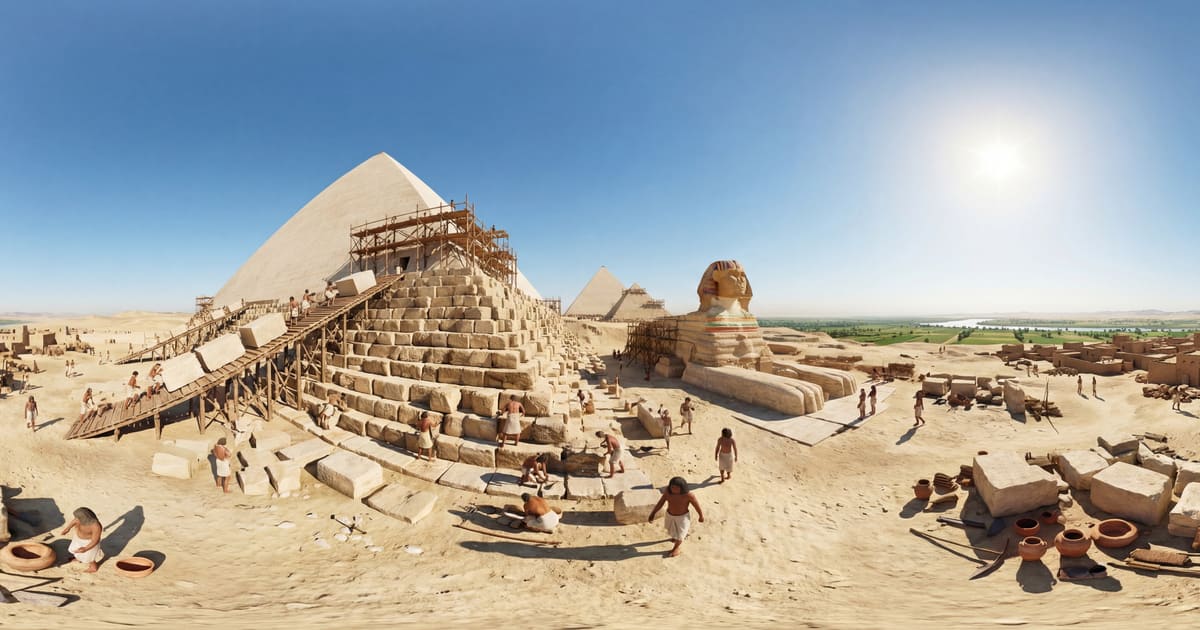 2570 BC 5 min read
Construction of the Great Pyramid of Giza
The workers' town, the bakery moulds and the harbour logs — the pyramid as a payroll problem.
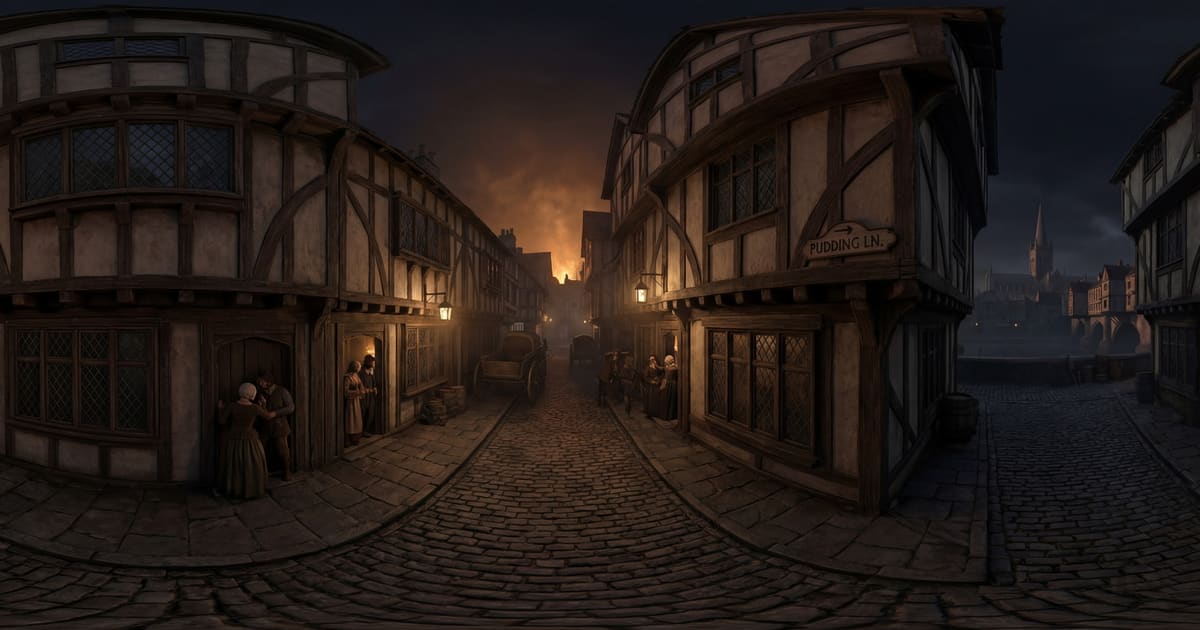 1666 4 min read
Great Fire of London at Pudding Lane
Four days, a baker's oven and a mayor who went back to bed. The fire that rewrote a city's building code.
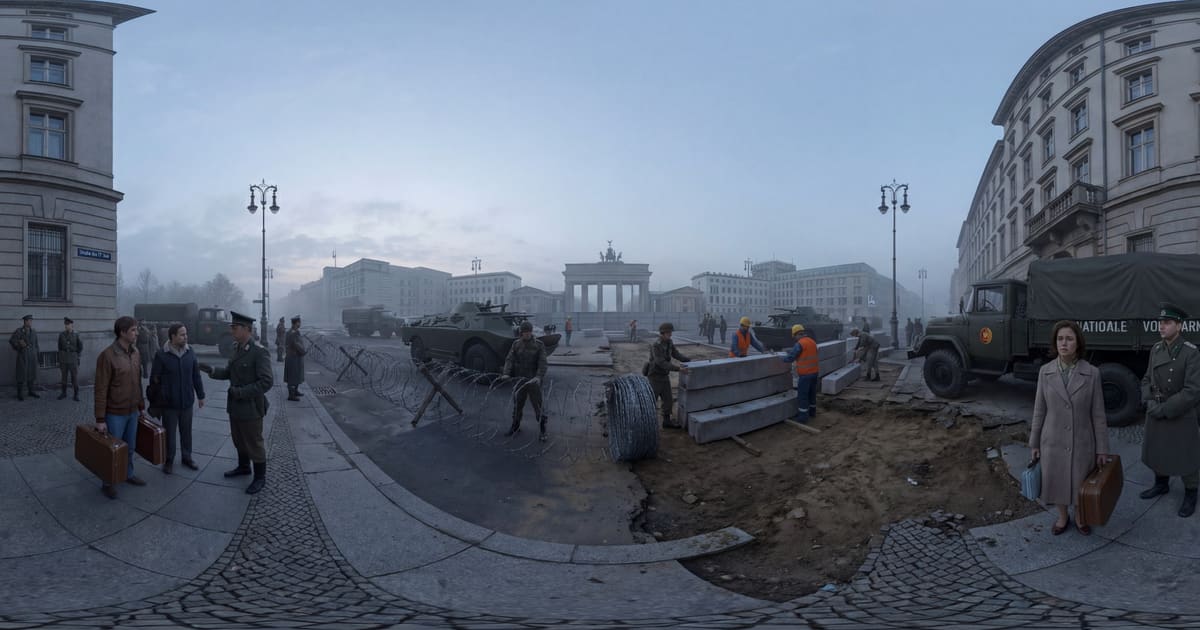 1961 4 min read
Construction of the Berlin Wall
A denial in June, barbed wire in August. How a border was closed in a single Sunday night.
The deepest dives
The scenes where the surviving record is richest, so the reporting runs longest.
Ancient world (before 500 AD)
Pyramids, temples and amphitheatres — scenes dated by construction technique and city layout.
4 scenes · 19 min of reading
Ancient world timeline and dating guide → 2570 BC🇪🇬 Egypt 5 min read
Construction of the Great Pyramid of Giza
A pyramid is not a monument while it is being built. It is a payroll, a harbour, a bakery the size of a village, and 2.3 million blocks that all have to arrive in the right order.
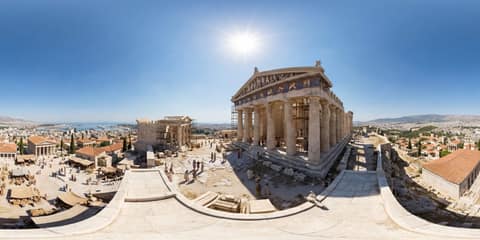 430 BC🇬🇷 Greece 5 min read
Parthenon Under Construction, Athens
The Parthenon was paid for with other cities' defence money, finished in fifteen years, and painted in colours that would look garish today. Within twelve months, plague would kill the man who ordered it.
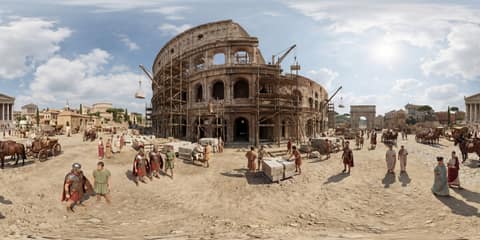 78🇮🇹 Italy 5 min read
Colosseum Construction, Ancient Rome
Vespasian drained Nero's private boating lake and gave the ground back to Rome as an amphitheatre — a piece of political theatre so effective the building still carries his family's reputation.
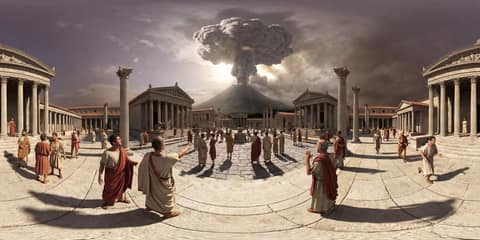 79🇮🇹 Italy 5 min read
Eruption of Mount Vesuvius, Pompeii
The eruption gave Pompeii roughly eighteen hours of warning that nobody knew how to read. Vesuvius had not erupted in living memory, and Latin did not yet have a word for volcano.
Medieval world (500 – 1500)
Charters, cathedrals and treasure fleets, where armour and ship rig give the century away.
3 scenes · 14 min of reading
Medieval world timeline and dating guide →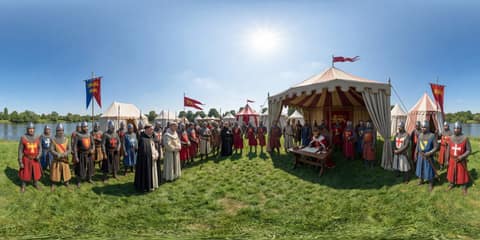 1215🇬🇧 the United Kingdom 5 min read
Signing of Magna Carta at Runnymede
The charter sealed at Runnymede failed within ten weeks, triggered a civil war, and still became the document every English-speaking constitution has quoted since.
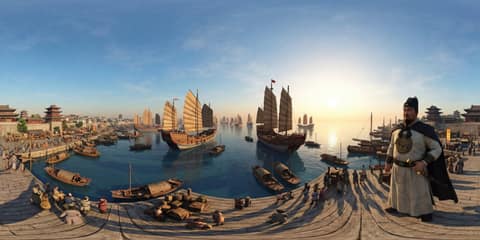 1420🇨🇳 China 4 min read
Zheng He's Treasure Fleet Expedition
China built the largest wooden ships the world had ever seen, sailed them to Africa seven times, then walked away from the entire program within a generation.
 1455🇩🇪 Germany 4 min read
Gutenberg's Print Shop, Mainz
Gutenberg's real breakthrough was not the press but a reusable brass mould, and it made him bankrupt within the same year his Bible was finished.
Early modern (1500 – 1750)
Printing, empire and playhouses. Timber towns and sailing rigs are the clues that matter.
6 scenes · 27 min of reading
Early modern timeline and dating guide →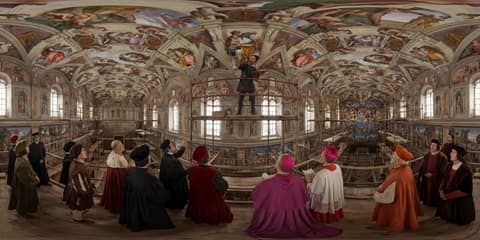 1510🇮🇹 Italy 5 min read
Michelangelo Painting the Sistine Chapel Ceiling
Michelangelo took the commission as a sculptor forced into a medium he distrusted, then spent four years redefining what fresco could do.
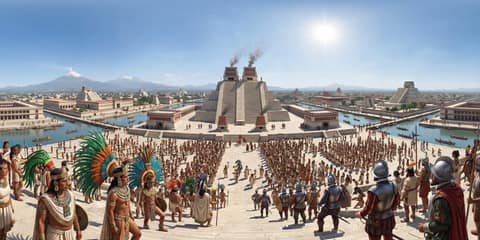 1519🇲🇽 Mexico 4 min read
Cortés Arrives in Tenochtitlan
Cortés entered a lake city bigger than any in Spain with fewer than four hundred of his own men and tens of thousands of Indigenous allies who had their own reasons for wanting the Aztec empire gone.
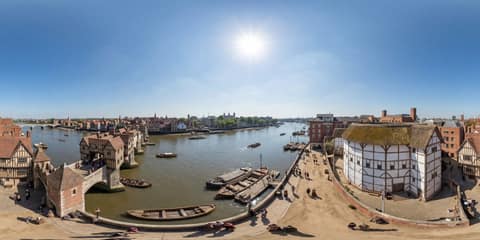 1600🇬🇧 the United Kingdom 5 min read
Shakespeare's Globe Theatre, London
The Globe was built from the salvaged timbers of an older playhouse, carried across the Thames in secret after a landlord dispute, and burned down thirteen years later during a cannon mishap that killed no one.
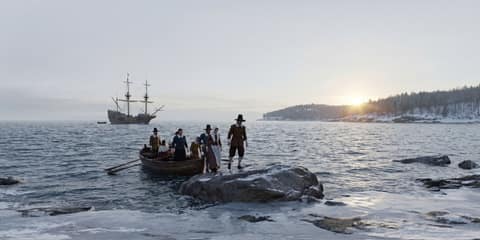 1620🇺🇸 the United States 5 min read
Mayflower Landing at Plymouth Rock
The Mayflower was aiming for Virginia, missed by five hundred miles, and arrived with no charter valid for the land it actually reached — which is why 41 men signed a compact before anyone stepped ashore.
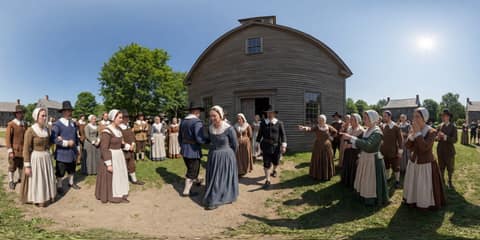 1627🇺🇸 the United States 4 min read
Plymouth Colony Settlement
By 1627 the Pilgrims owed London investors £1,800 they could not pay, so the colony's answer was to abolish communal farming and hand every family its own plot — an accidental experiment in property rights.
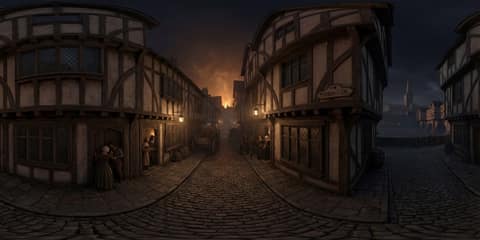 1666🇬🇧 the United Kingdom 4 min read
Great Fire of London at Pudding Lane
London ignored the lesson of its 1633 fire, so when flames broke out in Thomas Farriner's Pudding Lane bakery in 1666 — no inquiry established how — the city burned for four days.
Industrial age (1750 – 1900)
Steam, iron and glass. Rails, bridges and exhibition halls date a scene within a decade.
17 scenes · 77 min of reading
Industrial age timeline and dating guide →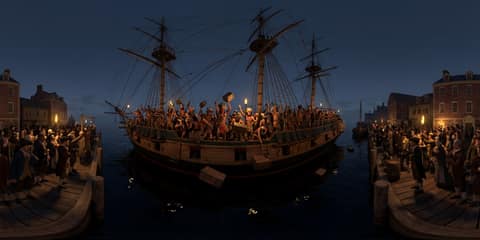 1773🇺🇸 the United States 4 min read
Boston Tea Party
The Tea Act was designed to make tea cheaper, not more expensive, which is exactly what made it dangerous — colonists who accepted it would be accepting Parliament's right to tax them without consent.
 1776🇺🇸 the United States 4 min read
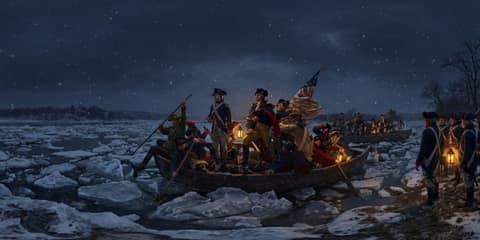
Washington Crossing the Delaware
Washington's army had lost New York, was down to roughly a third of its earlier strength, and would legally dissolve at midnight on 31 December — the crossing was a gamble to win a battle before the army itself expired.
 1783🇫🇷 France 5 min read
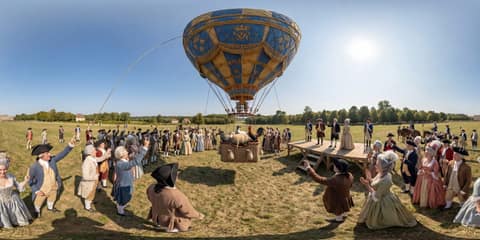
Montgolfier Brothers' First Animal Flight at Versailles
The Montgolfier brothers believed they had discovered a special gas in smoke, and it took another century for anyone to correctly explain why their balloon actually flew: hot air is simply lighter than cold.
 1799🇪🇬 Egypt 5 min read
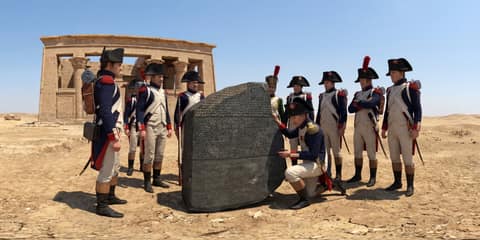
Discovery of the Rosetta Stone
The Rosetta Stone is a broken fragment of a much larger slab, its lower-left corner and top missing, and its Greek text alone would probably have been enough to crack hieroglyphs eventually — just decades slower.
 1830🇬🇧 the United Kingdom 4 min read
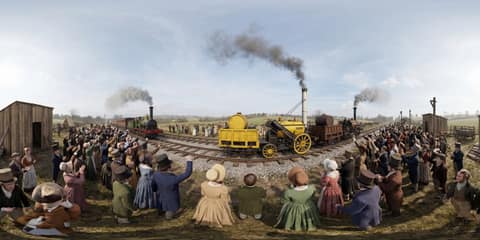
Opening of the Liverpool and Manchester Railway
Britain's fastest transport had been a canal barge at four miles an hour. Fifteen months later a passenger train was outrunning the Duke of Wellington's own coach, and killing a cabinet minister on opening day.
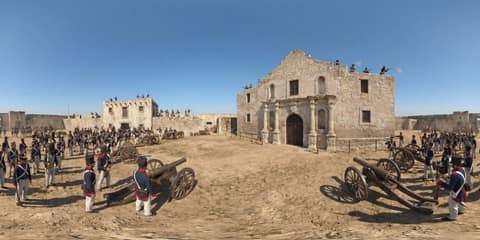 1836🇺🇸 the United States 4 min read
Battle of the Alamo
Santa Anna raised a red flag over San Antonio meaning no quarter would be given, and for thirteen days the defenders inside a converted mission believed help was still coming.
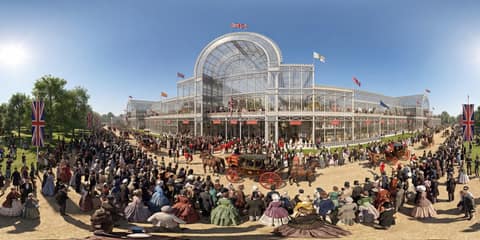 1851🇬🇧 the United Kingdom 4 min read
The Great Exhibition at Crystal Palace, London
A greenhouse-builder with no formal architectural training designed the largest glass building on Earth, and had it finished from a standing start in about six months.
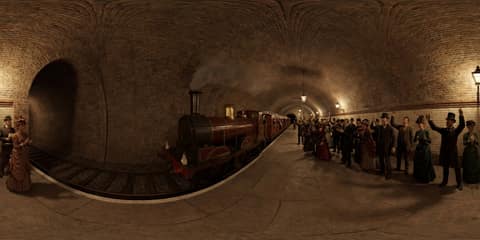 1863🇬🇧 the United Kingdom 4 min read
Opening of the Metropolitan Railway, World's First Underground
London solved its traffic problem by tunnelling under it, then filled that tunnel with coal-burning steam locomotives and asked passengers to breathe the result for the next quarter century.
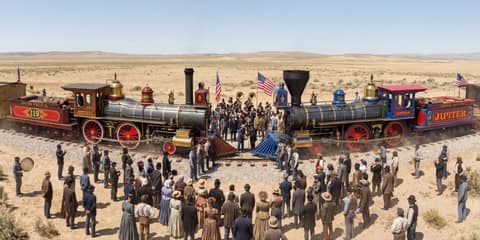 1869🇺🇸 the United States 5 min read
Golden Spike Ceremony, Promontory Summit
Two railroads raced past each other building parallel grades for months because neither had been told where to actually meet, until Congress finally forced a single junction point.
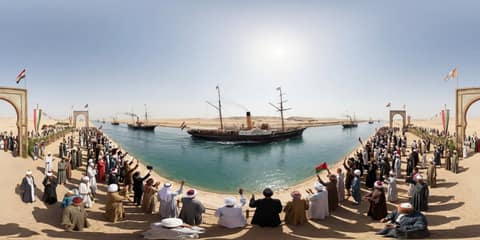 1869🇪🇬 Egypt 4 min read
Opening of the Suez Canal
Ferdinand de Lesseps had never built anything before this, Britain tried to sabotage the project twice, and the canal still opened only sixteen months behind schedule.
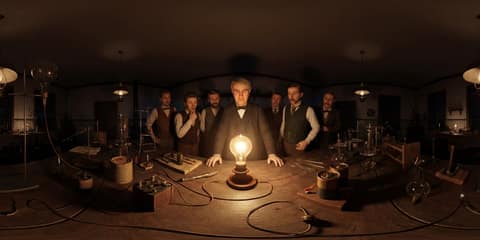 1879🇺🇸 the United States 5 min read
Edison's Light Bulb Demonstration, Menlo Park
Edison's real invention that New Year's Eve was not the glowing filament but the sight of dozens of lamps burning steadily from one shared generator, a system gas light could never match.
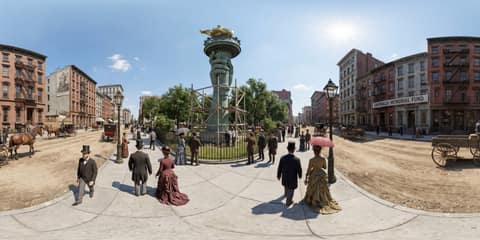 1882🇺🇸 the United States 4 min read
Statue of Liberty's Arm on Display in Manhattan
The French gift arrived in pieces with no money to assemble it, so for six years the Statue of Liberty existed in New York only as a giant bronze forearm standing alone in a city park.
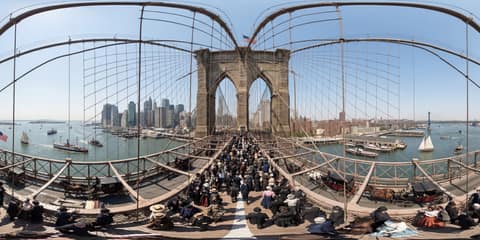 1883🇺🇸 the United States 5 min read
Brooklyn Bridge Grand Opening
A bridge two men designed and a third finished by signalling letters from a sickbed with a telescope trained on the towers she could not climb herself.
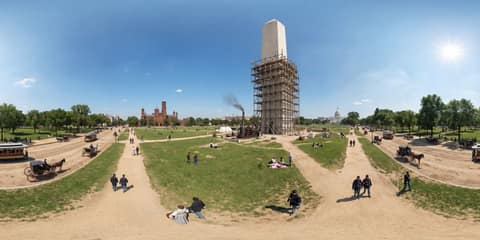 1884🇺🇸 the United States 4 min read
Washington Monument Nearing Completion
The tallest structure on Earth for five years began as a stump abandoned for a quarter century, half-built and pigeonholed by the Civil War and its own fundraising society running out of money.
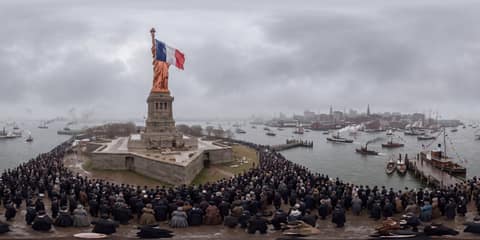 1886🇺🇸 the United States 4 min read
Statue of Liberty Dedication
The statue was unveiled in a fog so thick most of the harbour crowd never saw it, and the flag over her face dropped early, in the middle of a senator's speech.
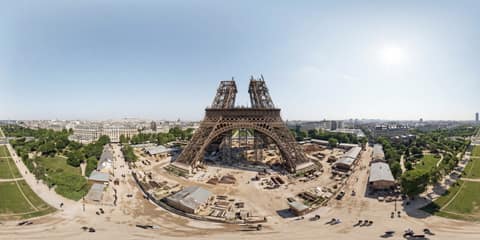 1889🇫🇷 France 4 min read
Eiffel Tower Construction for World's Fair
Three hundred artists signed a public letter calling it a monstrous, useless chimney; it was meant to come down after twenty years and survives today because a radio antenna proved indispensable.
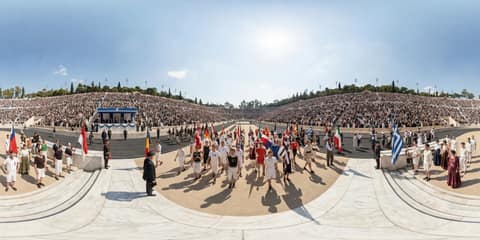 1896🇬🇷 Greece 5 min read
First Modern Olympic Games, Athens
A Greek revival funded by one wealthy expatriate crowned a nine-day event so improvised that several winners were tourists who wandered in and simply entered.
Modern era (1900 – 1945)
Flight, revolution and mass production, read from aircraft types, cars and street signage.
11 scenes · 51 min of reading
Modern era timeline and dating guide →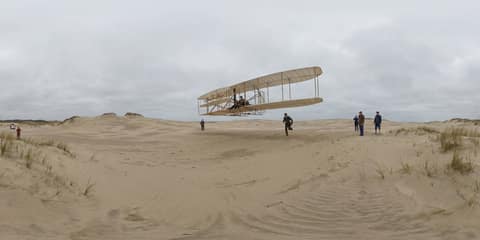 1903🇺🇸 the United States 5 min read
Wright Brothers' First Powered Flight
Two bicycle mechanics with no engineering degrees beat every funded, credentialed rival to powered flight by rebuilding the aerodynamic tables everyone else was using and finding them wrong.
 1905🇬🇧 the United Kingdom 5 min read
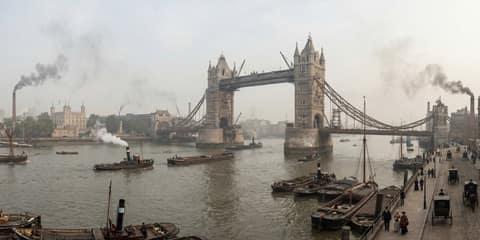
Industrial London and Tower Bridge
London's most photographed bridge is a steel skeleton wearing a Gothic costume, built to open for tall ships in a port so crowded that a plain crossing would have strangled it.
 1906🇺🇸 the United States 5 min read
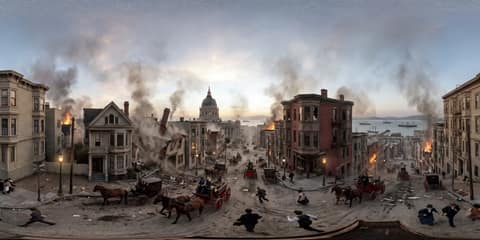
San Francisco Earthquake and Fire
The shaking lasted under a minute; the fire it triggered burned for three days and did most of the damage, because the earthquake had already broken the mains firefighters needed.
 1909🇬🇧 the United Kingdom 5 min read
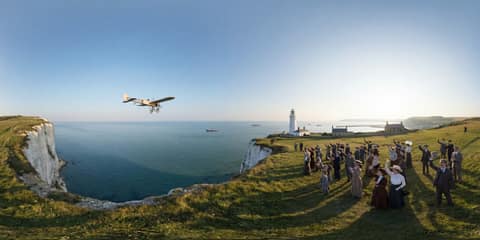
Louis Blériot Crosses the English Channel
Louis Blériot flew the Channel with a bandaged foot, no compass, and an engine that overheated so badly that a lucky rain shower may have saved the flight.
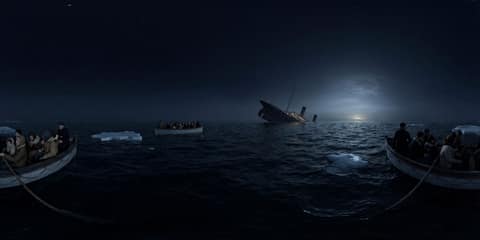 1912 5 min read
RMS Titanic Sinking
Titanic carried lifeboat capacity for barely half the people aboard and still met every regulation, because the rules were written for a ship a third her size.
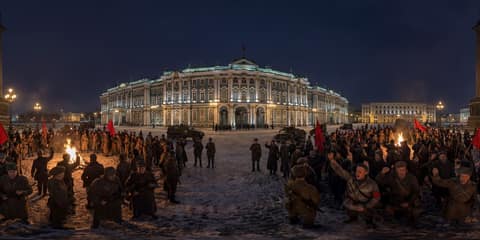 1917🇷🇺 Russia 5 min read
Storming of the Winter Palace, October Revolution
The government that fell in a single night had already lost the war, the countryside and the streets; the Bolsheviks mostly had to walk in and pick up what nobody else was defending.
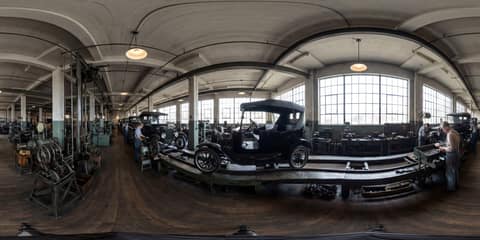 1920🇺🇸 the United States 5 min read
Ford Model T Assembly Line, Dearborn
Ford did not invent the assembly line or the automobile, but he was the one willing to pay workers enough to quit the moment the line's monotony became unbearable — and it worked.
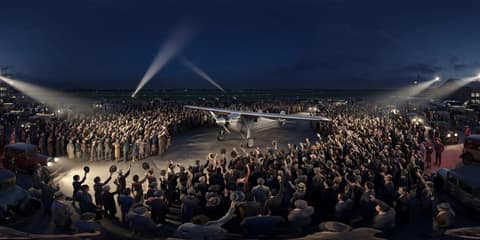 1927🇫🇷 France 4 min read
Lindbergh's Arrival in Paris After Transatlantic Flight
Lindbergh flew to Paris without a radio, a parachute he trusted, or a forward window, navigating for thirty-three and a half hours by dead reckoning and the stars, alone.
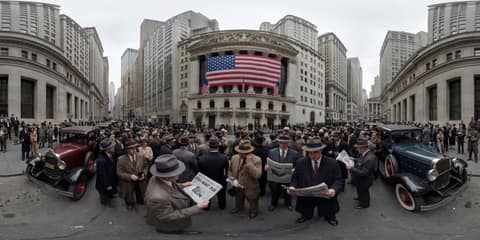 1929🇺🇸 the United States 4 min read
Wall Street Crash of 1929
The market lost more value in two trading days than the entire federal government spent in a year, and the ticker was running so far behind that traders were still selling into prices that no longer existed.
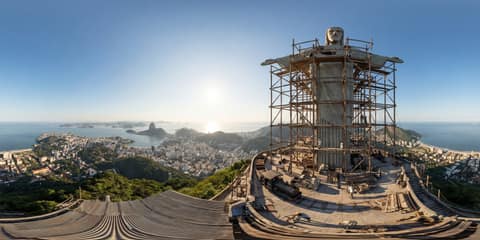 1930🇧🇷 Brazil 5 min read
Christ the Redeemer Under Construction, Rio de Janeiro
The statue was funded almost entirely by public donation and built by hand on a mountaintop, its soapstone skin laid tile by tile by workers who signed their names on the underside where no one would ever see them.
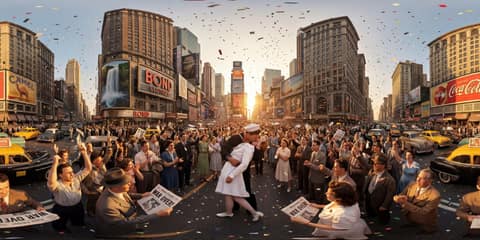 1945🇺🇸 the United States 4 min read
V-J Day Celebration in Times Square
The photograph everyone remembers freezes a kiss between two people who never gave their names to the photographer, and more than a decade of competing claims never settled who they actually were.
Contemporary (1945 – today)
Cold war walls, concert stages and skylines — skylines and crowds do the dating here.
9 scenes · 41 min of reading
Contemporary timeline and dating guide →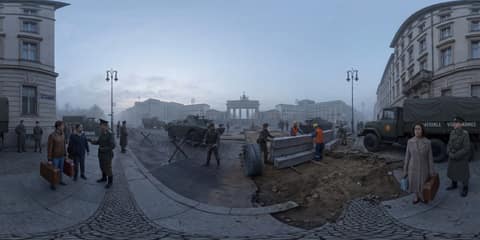 1961🇩🇪 Germany 4 min read
Construction of the Berlin Wall
East Germany's leader promised in June 1961 that nobody intended to build a wall. Eight weeks later, on a Sunday night, his soldiers began doing exactly that with barbed wire and paving stones ripped from the street.
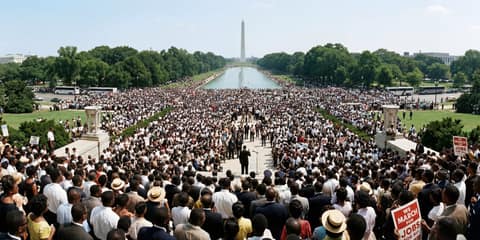 1963🇺🇸 the United States 5 min read
March on Washington for Jobs and Freedom
Organisers braced for riots and asked Washington bars to stop selling alcohol for the day; instead a quarter of a million people spent eight hours singing hymns and folk songs in the August heat.
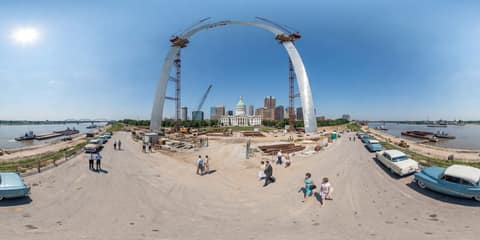 1964🇺🇸 the United States 4 min read
Gateway Arch Under Construction, St. Louis
Two half-finished steel legs are climbing toward each other over the Mississippi with nothing holding them up but math: if the calculations are off by even a fraction of an inch, they will not meet.
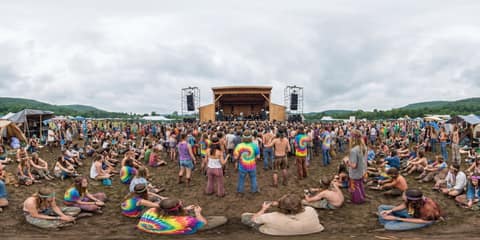 1969🇺🇸 the United States 5 min read
Woodstock Music Festival
Promoters budgeted for 50,000 people on a dairy farm they had rented six weeks before the gates opened; eight times that many showed up and the fences never got built.
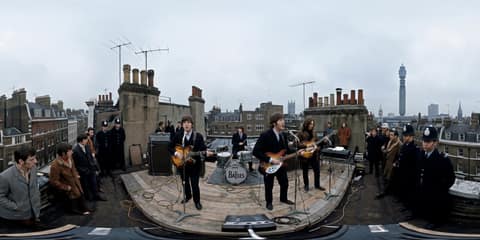 1969🇬🇧 the United Kingdom 5 min read
The Beatles' Rooftop Concert
The Beatles had not played a live show in over two years when they climbed onto their own office roof in January cold, plugged in without warning anybody, and let London below decide whether it was music or a nuisance.
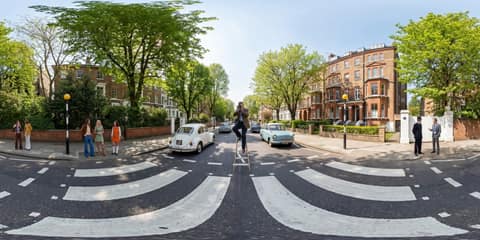 1969🇬🇧 the United Kingdom 5 min read
Abbey Road Album Cover Photo Shoot
A photographer with ten minutes and a stepladder produced the most imitated album cover ever made, and nobody involved thought it was anything more than a quick way to finish a shoot list.
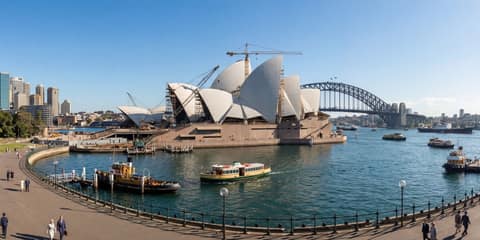 1971🇦🇺 Australia 4 min read
Sydney Opera House Under Construction
The architect who designed it resigned in fury seven years earlier and never once saw the finished building; by the time it opened, the sails he imagined had cost fourteen times his original estimate.
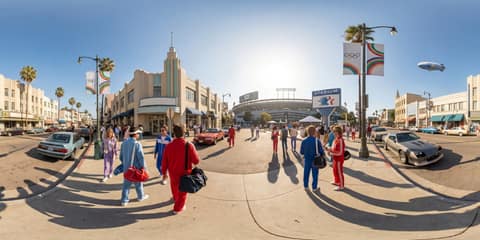 1984🇺🇸 the United States 5 min read
Los Angeles Summer Olympics
Los Angeles was the only city that bid for the 1984 Games, and it used that leverage to force the IOC to accept a fully privatised Olympics for the first time.
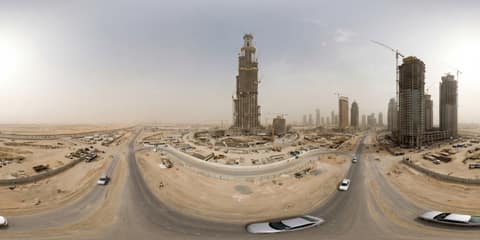 2008🇦🇪 United Arab Emirates 5 min read
Burj Khalifa and Dubai Skyline Under Construction
Workers poured concrete at night because Dubai's daytime heat sets it too fast, and pumped it higher than any building on Earth had ever needed it to go.
Frequently asked questions
What is a HistoryGuesser moment?
A single documented event or scene recreated as a 360° panorama — the Parthenon mid-build in 430 BC, Pudding Lane burning in 1666, the Beatles on a Mayfair roof in 1969. Each one is a round in the game and a page here with the full story, the visual clues and a short Q&A.
How long is each story?
Most run about a thousand words — a five-minute read. Every one follows the same shape: what you would have seen standing there, how the moment unfolded, a contemporary quote, the figures that matter, a dated timeline and the thing most people get wrong about it. The read time is printed on every card below.
How accurate are the scenes?
Every moment is tied to a dated, documented event with real coordinates. The panoramas are reconstructions rather than photographs — most of these scenes predate photography — but the architecture, technology and clothing are researched to the year shown.
Can I use these pages for teaching?
Yes. The clue lists work well as source-analysis prompts, the questions and answers work as a worksheet, and the game itself is free with no account required for the first rounds.
How do I play a specific moment?
Start a game from the home page and the library shuffles moments into your rounds. The daily challenge serves five fresh scenes every day, and country collections group moments by where they happened.
Can I filter the library?
Yes — the bar at the top of this page narrows the library by period, kind of event and country, and the search box matches titles, places, years and the clues themselves. Every combination is a real URL, so a filtered view can be bookmarked or sent to someone else, and once you have read a few stories you can hide them and see only what is left.
More free history games
Scored quizzes, a printable trivia bank and country collections — all free, no sign-up.