A theatre stolen back at Christmas
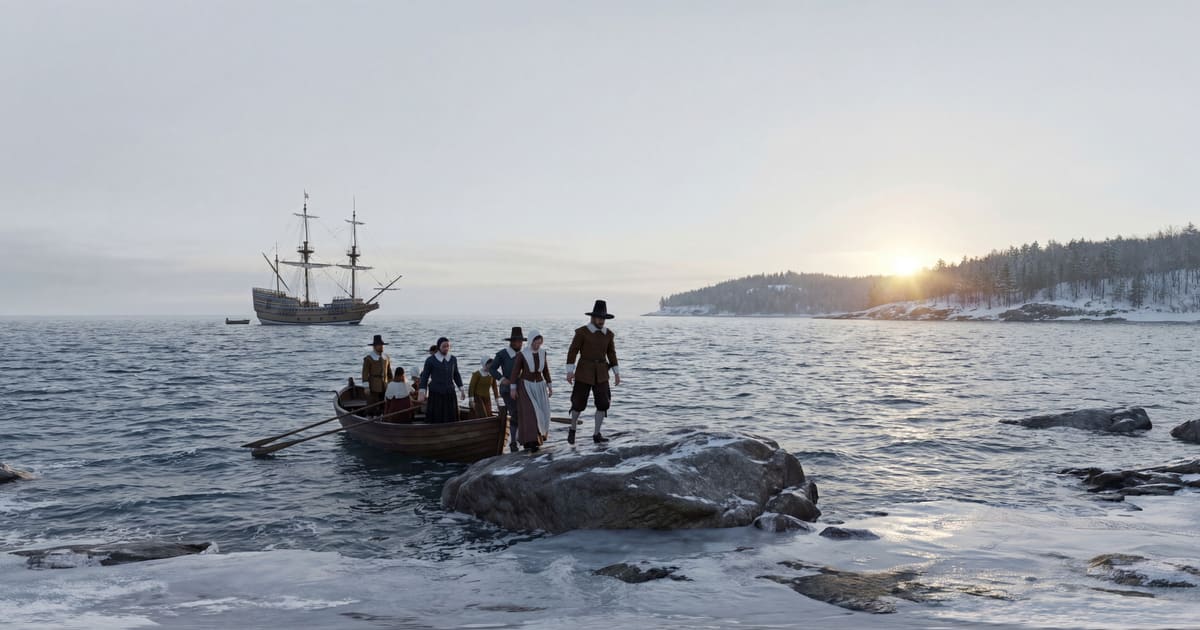
The Globe's timbers began life in Shoreditch as The Theatre, built by James Burbage in 1576 on land he leased rather than owned outright. When the lease expired in a bitter dispute with the landlord, Burbage's sons Cuthbert and Richard, together with their carpenter Peter Street and roughly a dozen hired workmen, dismantled the entire structure between 28 December 1598 and early January 1599, over the Christmas holiday when Allen's men were least likely to intervene. The numbered oak timbers were hauled by cart to the riverside, ferried across the frozen Thames on wherries, and stored over the winter in a yard near Bridewell Stairs before construction on Bankside began that spring.
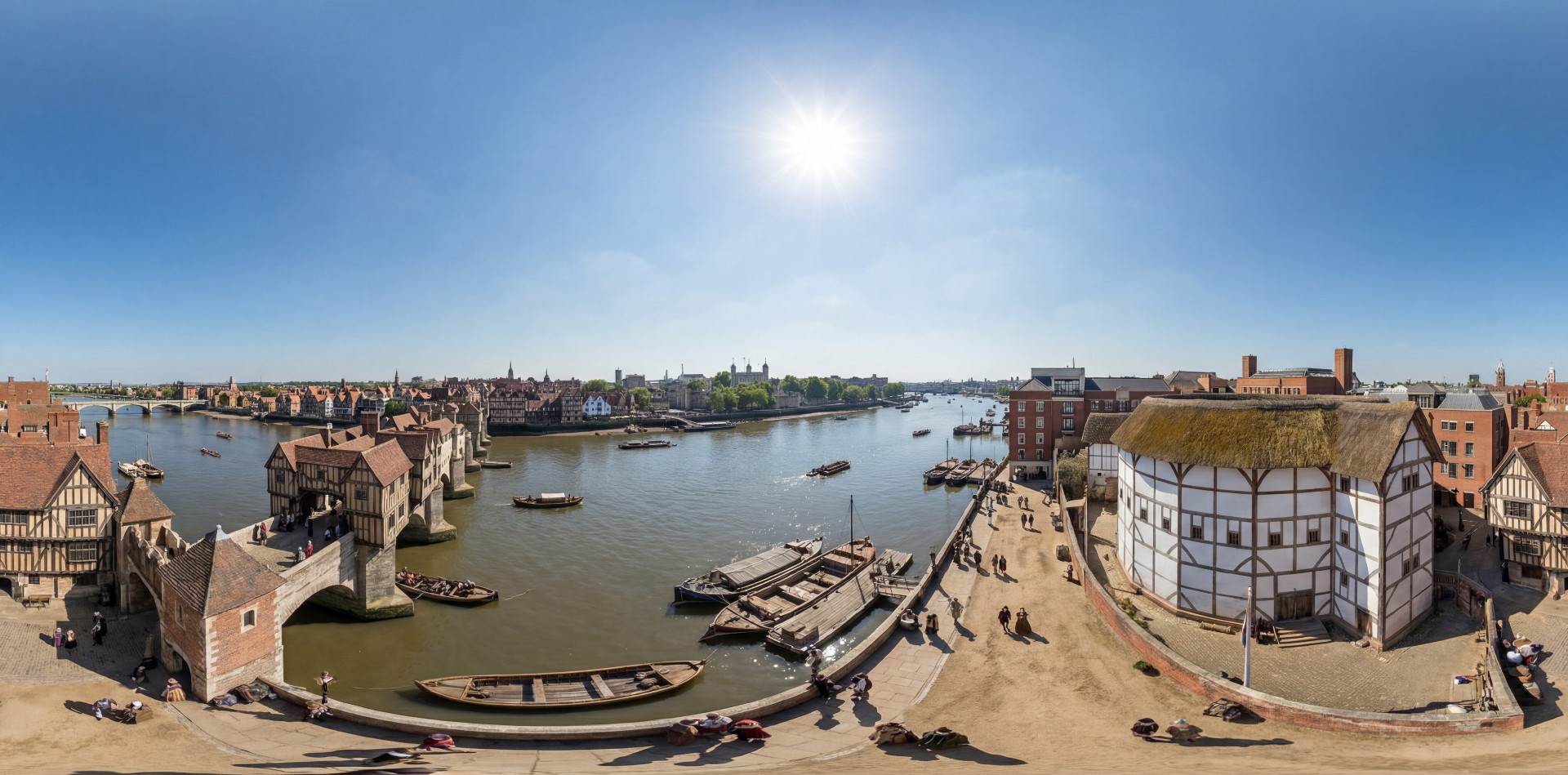
Bankside itself lay outside the City of London's jurisdiction, in Southwark, alongside bear-baiting arenas and brothels the City authorities had already banned from within its own walls — the same freedom from municipal control that let playhouses operate there at all without constant threat of closure by aldermen hostile to public gatherings.
The landlord, Giles Allen, sued over the removal and lost; the case dragged through the Court of Requests for years, with witnesses describing carpenters working through the night by torchlight to strip the frame down to numbered timbers before dawn, loading them onto wherries for the crossing before Allen's men could intervene. Allen later claimed the timber was worth some £700, a figure the Burbages disputed sharply, and depositions from the case, preserved in the National Archives, remain one of the best surviving records of exactly how an Elizabethan playhouse was actually framed and joined.
~3,000
capacity, including standing room in the yard
1 penny
cheapest admission, to stand as a groundling
1599
year the Globe opened on Bankside
29 Jun 1613
date fire destroyed the original building
A company that owned its own stage
The Lord Chamberlain's Men financed the new building as shareholders, an unusual arrangement that made its leading actors and its chief playwright, William Shakespeare, part owners of the venue rather than salaried employees of it. Cuthbert and Richard Burbage each held a half-share as the building's owners, while Shakespeare and four fellow actors split the remaining half between them, giving Shakespeare roughly a tenth of the whole enterprise for an investment historians estimate at around £10. That stake gave Shakespeare a direct financial interest in filling roughly three thousand seats each afternoon, not just in writing well for its own sake.
Performances ran in daylight with no artificial lighting, which shaped the plays themselves: night scenes were signalled by dialogue and torches carried on stage, not by darkness, since the open-air yard let in whatever light the afternoon sky provided that particular day, rain or shine, in a city with no fixed theatrical calendar.
A flag flown from the turret, sometimes said to show Hercules bearing the globe on his shoulders, signalled to the whole south bank that a play was about that afternoon, while a trumpeter sounded three blasts to call the audience in from the surrounding taverns and stalls before the opening scene began.
All the world's a stage, and all the men and women merely players.
Cannon fire and a quick rebuild
On 29 June 1613, a stage cannon fired to mark the king's entrance during a performance of Henry VIII (All Is True) sent wadding into the thatched roof; the fire spread so fast along the dry thatch that the entire building burned to the ground in under two hours, according to a letter written days later by Sir Henry Wotton. Contemporary accounts record no deaths, only one man whose burning breeches were doused with a bottle of ale by a quick-thinking bystander, and the audience escaped in the general scramble with only minor injuries reported.
The company rebuilt on the same foundations within a year, this time with a tiled roof instead of thatch to prevent any repeat. That second Globe stood until the Puritan-controlled Parliament ordered London's theatres closed in 1642 and eventually demolished in the 1640s; a modern reconstruction opened near the original site in 1997.
Archaeologists located a small surviving portion of the original foundations in 1989, under a listed building a short walk from Sam Wanamaker's reconstruction, confirming the polygonal shape long assumed from contemporary drawings and Dutch visitor sketches but never before verified on the ground itself.
What everyone says
The Globe was a rowdy, disreputable venue for the poor.
What the evidence says
Audiences spanned a wide social range within the same building: a penny bought standing room in the yard, but covered galleries with cushioned seats cost considerably more and drew merchants, gentry and, occasionally, visiting nobility to the same afternoon performance.
A Swiss tourist's afternoon out
The Swiss traveller Thomas Platter watched a play about Julius Caesar on Bankside in September 1599 and left one of the only detailed foreign eyewitness accounts of the experience, noting the entry fee at each gate, the vendors selling food and drink among the crowd, and musicians who played between the acts on wind and string instruments to entertain the paying audience while the stage was reset behind the curtain.
Groundlings paid their penny to a gatherer stationed at the yard entrance, who dropped the coins into a locked wooden box carried off afterward to be counted — the likely origin, many historians think, of the word 'box office', though gallery seats above cost extra, collected by a separate gatherer at the stair.
Shares in the company were split among a handful of leading actors, called sharers, who took a cut of the takings in exchange for covering the costs of costumes, props and the lease itself, an arrangement that made Shakespeare's income depend as much on a full yard on a wet Tuesday afternoon as on the quality of any single script he happened to be writing that season.
How it unfolded
1576
James Burbage builds The Theatre in Shoreditch on leased land.
Dec 1598
The company dismantles it overnight and moves the timbers to Bankside.
1599
The Globe opens under the Lord Chamberlain's Men on the south bank.
1600· the scene
The scene here: a full house watches a play in open daylight.
1613
A cannon misfire during Henry VIII burns the theatre down within the hour.
1997
Shakespeare's Globe reconstruction opens near the original site on Bankside.