Blown off course, and glad of it
The Mayflower's patent was for northern Virginia, near the Hudson. Rough autumn seas and shoals off Cape Cod turned the ship back after one attempt to sail south, and the passengers settled for land they had no legal right to occupy. That gap is what forced the Mayflower Compact — a stopgap government invented on the spot.
Forty-one adult men signed it aboard ship on 11 November, pledging to frame ‘just and equal laws’ and obey them. It bound servants and gentry alike, which was not how English law usually worked, and it did so because the alternative was no law at all.
The ship had sailed with a second vessel, the Speedwell, which twice sprang leaks and was abandoned at Plymouth, England, forcing eleven passengers to stay behind and cramming the rest — 102 in all — onto the Mayflower alone for the crossing, a 66-day voyage in a vessel built for cargo, not people. Only about a third of those aboard were part of the separatist congregation from Leiden; the rest, whom the separatists called ‘Strangers’, were hired hands, servants and families recruited by the merchant investors, and it was exactly that mixed, quarrelsome company the compact was written to hold together.
102
passengers who sailed from Plymouth, England
66 days
spent crossing the Atlantic
41
men who signed the Mayflower Compact
~50
passengers dead by the following spring
A harbour already emptied
The site the English called Plymouth was Patuxet, a Wampanoag town cleared by an epidemic — likely leptospirosis or a viral haemorrhagic fever carried by earlier European contact — between 1616 and 1619. Cleared fields, stored corn caches and a freshwater brook were what drew the settlers to choose it over other spots scouted along the bay.
Squanto, the one Patuxet survivor, had been kidnapped by an English captain years before and sold into slavery in Spain; he returned to New England to find his own town gone. His fluency in English, gained in captivity, made him the interpreter who kept the colony alive through its first year, teaching the settlers to plant corn with fish as fertiliser and to fish the local weirs.
Before Squanto appeared, the company had already raided nearby Nauset caches of buried corn to survive the first weeks, an act they later repaid, but one that soured relations with neighbouring bands and shaped how warily the Wampanoag approached the new arrivals. It was Massasoit, sachem of the Wampanoag confederation, who ultimately chose diplomacy over retaliation, sending Squanto and later Samoset as intermediaries rather than allowing the weakened colony to be simply overrun.
In ye name of God Amen. We whose names are underwritten... doe by these presents solemnly & mutually in ye presence of God, and one of another, covenant & combine our selves togeather into a civill body politick.
A winter that killed half of them
Scurvy, pneumonia and general exposure — not starvation in the strict sense — did the damage that first winter. By March, roughly 50 of the 102 who had sailed were dead, including all but four of the adult women. The Mayflower itself stayed anchored offshore through it, its crew nearly as sick as the colonists.
William Bradford, who lost his own wife Dorothy overboard in Provincetown harbour before the colony was even founded, later wrote the deaths down plainly, without embellishment, in a history not published in full until 1856.
Some days in that first winter, only six or seven colonists were well enough to care for the rest, hauling wood, cooking and burying the dead almost in secret so that watching Wampanoag scouts would not learn how weak the settlement truly was. Graves were reportedly left unmarked and levelled over so as not to advertise the mounting toll, a precaution Bradford's own account suggests the colonists took seriously.
What everyone says
The Pilgrims landed on Plymouth Rock.
What the evidence says
No contemporary document mentions a rock. The identification was made in 1741 by a 94-year-old church elder recalling stories from his youth, more than a century after the fact.
What the compact became
The Mayflower Compact had no force beyond the colony itself and was never ratified by the Crown, yet it set a working precedent: government by consent of the governed, recorded in writing before any law was broken. Plymouth used it to elect Bradford governor within months, an office he held for roughly thirty years.
The original parchment has not survived; it is known only through Bradford's own transcription and a 1622 pamphlet, Mourt's Relation, printed in London to attract further settlers and investors to a colony that was, in truth, barely surviving. Mourt's Relation was compiled chiefly from the journals of Edward Winslow and William Bradford himself, and its promotional purpose meant it downplayed the winter's death toll even as it recorded, in passing, the harvest feast with Massasoit's men that later became the template for Thanksgiving.
Later American writers, particularly in the nineteenth century, elevated the compact into a founding document of self-government, a status it never claimed at the time but one that has kept its 41 signatures central to how the landing is remembered. John Quincy Adams delivered a widely reprinted 1802 oration crediting the compact with the whole of American constitutional government, a claim that outran anything the signatories themselves had intended by a document meant only to keep 102 hungry, frightened people from turning on one another.
How it unfolded
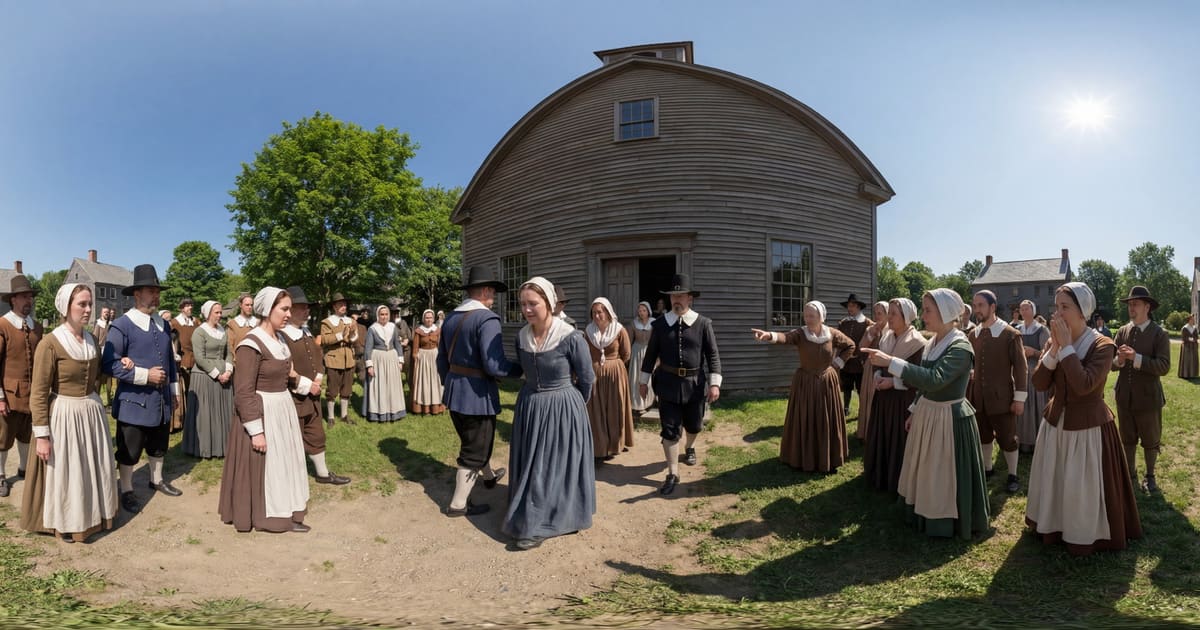
6 Sept 1620· the scene
The Mayflower departs Plymouth, England, alone after the Speedwell proves unseaworthy.
9 Nov 1620
Landfall at Cape Cod, well north of the intended Virginia patent.
11 Nov 1620
The Mayflower Compact is signed aboard ship in Provincetown harbour.
16 Dec 1620
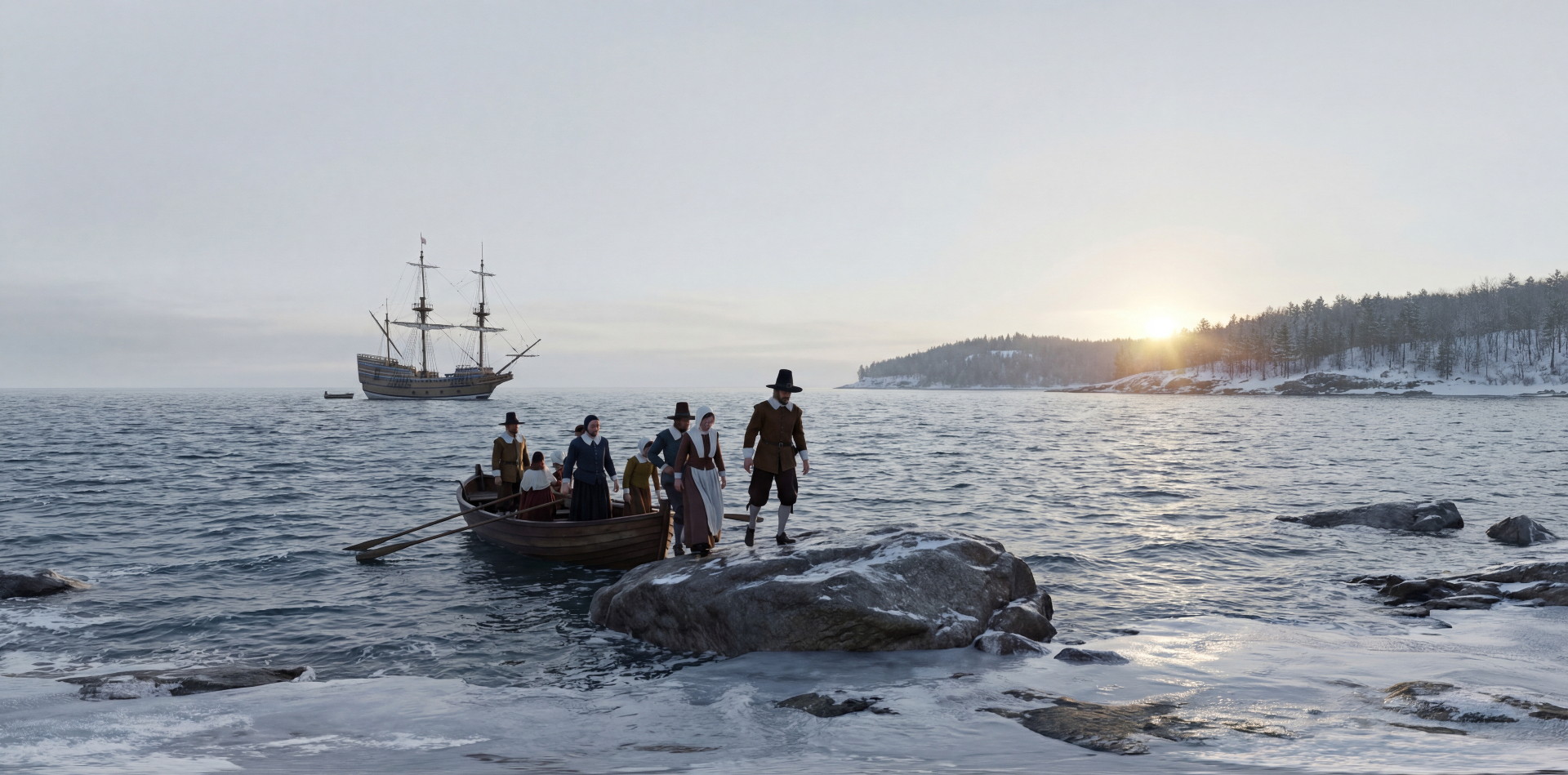
The scene here: passengers begin coming ashore at the cleared site of Patuxet.
March 1621
Samoset, then Squanto, make contact; about half the company has died.