Digging a trench and roofing it over
Engineer John Fowler and the Metropolitan Railway company used cut-and-cover construction: dig a wide trench along an existing road, build a brick tunnel inside it, then rebuild the road surface on top. The route ran mostly beneath the New Road, chosen precisely because it followed a public thoroughfare rather than cutting through terraces of houses, which kept compensation claims from property owners to a manageable number. The whole 3.75-mile line from Paddington to Farringdon Street took about three years of digging through some of the most heavily built-up ground in the world.
Construction disrupted the Fleet river's old culvert in June 1862, when a heavy storm burst the ageing brick sewer carrying the buried river and flooded a long stretch of the excavated tunnel near King's Cross, drowning tools and delaying work for weeks while contractors pumped the trench dry. The dig also dislodged enough of London's buried infrastructure that gas mains and water pipes had to be relaid alongside the new line as work proceeded, adding cost and time neither Fowler nor his contractors had fully budgeted for.
Charles Pearson, a City solicitor who had campaigned for the scheme since the 1840s, spent nearly two decades persuading sceptical investors and vestries that a railway running beneath a public road was practical at all; he died months before the line he had championed finally opened, having spent his own money and reputation for nearly two decades on a scheme most of the City establishment had originally dismissed as absurd.
6 km
length of the original Paddington–Farringdon route
~38,000
passengers carried on opening day
27
years the line ran on steam before electrification in 1890
£1m
approximate construction cost of the original line
Steam locomotives that were meant to hold their breath
Running a coal-fired engine through an enclosed tunnel required locomotives designed to 'condense' their own exhaust steam rather than vent it, storing the water in tanks to be blown off at the surface once a train reached open air. Fowler's condensing engines, built by Beyer, Peacock & Company, redirected exhaust steam back through the firebox water tanks instead of releasing it upward through the chimney. In practice the system only partly worked, and drivers and passengers alike complained for decades about sulphurous, choking air thick enough in places to obscure the gaslights along the platform edge.
Open cuttings at intervals were meant to vent smoke upward; residents nearby objected loudly to the fumes rising into their streets, an early and largely unresolved argument about who bears the cost of new infrastructure. Doctors of the period were divided on the health effects, and the Metropolitan's own engineers spent years tinkering with ventilation shafts and firebox designs without ever eliminating the sulphurous fog that gathered in the deeper sections of tunnel between stations.
One director reportedly claimed the sulphurous atmosphere was actually beneficial to passengers with respiratory complaints, a defence company doctors repeated for years even as newspaper correspondents wrote in to describe headaches and nausea after ordinary commutes, and at least one guard reportedly collapsed on shift after prolonged exposure to the tunnel atmosphere.
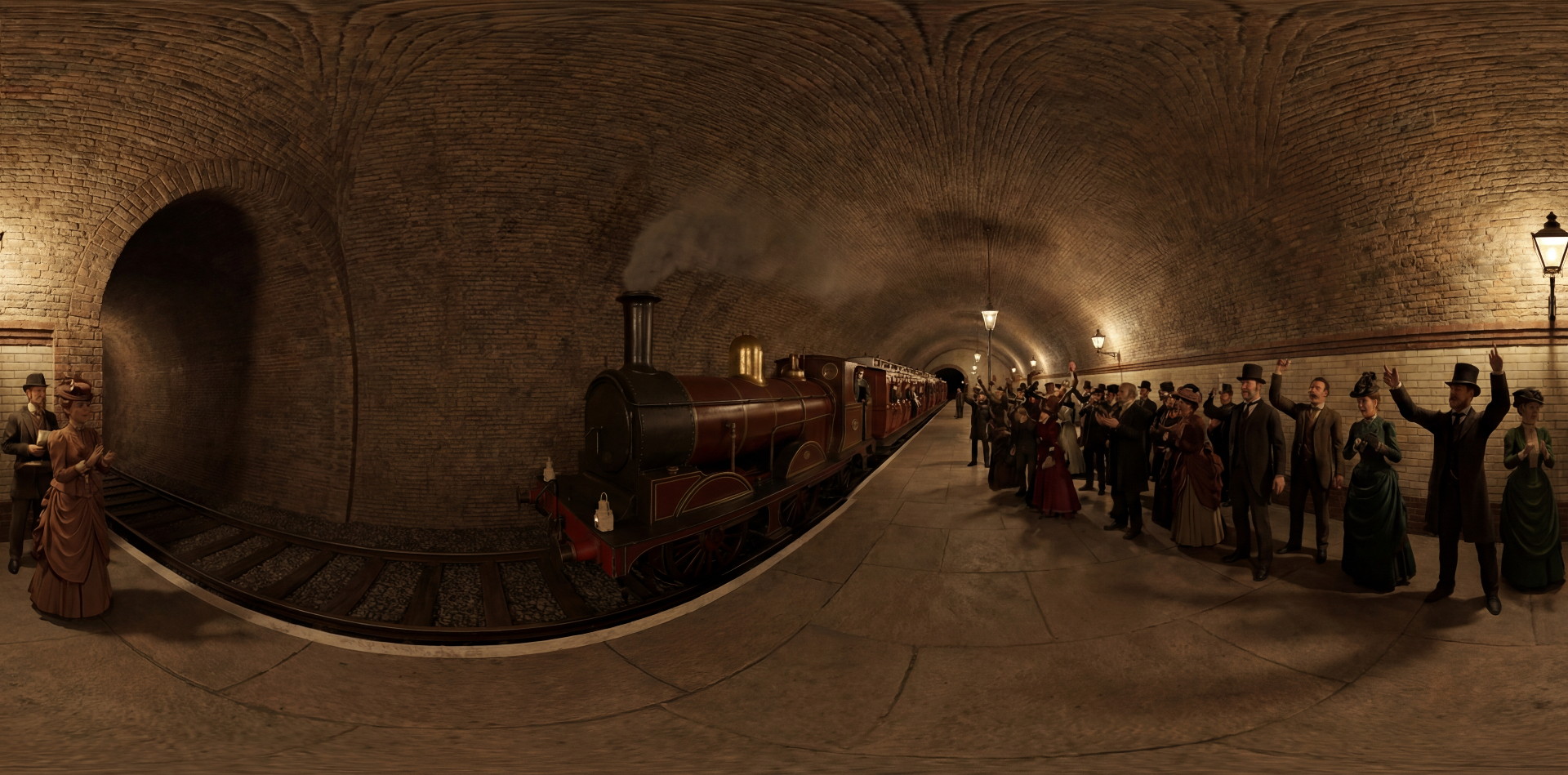
The Metropolitan Railway was yesterday opened to the public... never before was there such a scene as that which the Bishop's-road station presented.
Nearly 40,000 riders on the first day
The line opened on 10 January 1863 between Paddington (Bishop's Road) and Farringdon Street, and demand immediately outstripped supply: extra trains had to be commandeered from the Great Western Railway to cope with the crowds. Ticket receipts on opening day alone were reported in the tens of thousands.
The Times covered the opening with evident astonishment at both the scale of the crowds and the smoothness of a technology many readers had assumed would prove impractical underground, treating the demand itself as the day's real story rather than any lingering doubts about whether an underground railway could ever be made comfortable or safe for ordinary passengers.
The Metropolitan's success triggered rapid expansion and imitation, and its route out into Middlesex farmland eventually created suburban commuting on a scale London had never seen, spawning the branded 'Metro-land' developments of neat suburban villas decades before electrification made the tunnels themselves bearable to ride through daily.
What everyone says
The Underground has always run electric trains.
What the evidence says
For its first 27 years the world's oldest underground railway ran entirely on coal-fired steam locomotives adapted to vent less smoke — not eliminate it — inside brick tunnels, an arrangement passengers tolerated rather than enjoyed.
From soot to the modern Tube
The Metropolitan and its rival, the District Railway, spent the following decades locked in overlapping construction that eventually formed the Circle line, a route defined as much by corporate rivalry as by any coherent transport plan.
Electrification finally arrived in 1905, replacing the condensing locomotives after decades of steam operation underground, and passengers who had tolerated soot-streaked brickwork and sulphurous air for a generation found themselves in clean, quiet carriages almost overnight, with journey times shortened simply because electric trains accelerated and braked faster than the old steam stock ever had.
The original Paddington-to-Farringdon tunnels still carry trains today as part of the Metropolitan and Circle lines, making this stretch of Victorian brickwork the oldest continuously operating underground railway tunnel in the world, still bearing traces of soot in its brickwork from decades of steam operation despite more than a century of electric trains since.
How it unfolded
1860
Cut-and-cover work begins along the New Road route.
1862
A burst Fleet river culvert floods part of the excavated tunnel.
10 January 1863· the scene
The line opens; the scene shown here, a packed carriage under gaslight.
1863–1884
The line is extended and looped into the Circle line.
1890
The City & South London Railway proves electric traction works underground.
1905
The Metropolitan itself finally converts core sections to electric power.